
Welcome to the world of fitness! Starting your journey can feel overwhelming, with so much equipment and advice available. But if there's one piece of gear that is incredibly effective, versatile, and simple to start with, it's the dumbbell.
As a leading supplier in the fitness equipment industry, we've helped countless gyms and individuals build their foundations. We believe that everyone, especially beginners, should have access to clear, practical guidance. This article will walk you through everything you need to know—from selecting your very first set of dumbbells to performing your first effective workout safely and confidently.
Part 1: How to Choose Your Perfect Dumbbells
Before you can start lifting, you need the right tools. Not all dumbbells are created equal, and the best choice for you depends on your goals, space, and budget.
1. Types of Dumbbells: Learning Your Options
Fixed-Weight Dumbbells: These are the classic, one-piece dumbbells you see in most gyms. Each one is a fixed weight (e.g., 5kg, 10kg, 15kg).
Pros: Extremely durable, quick to grab and use, no setup time. Perfect for circuit training or "super-setting" (moving quickly between exercises).
Cons: You need multiple pairs to progress, which can be expensive and take up a lot of space. A beginner set (e.g., 2kg, 4kg, 6kg) is a great start.
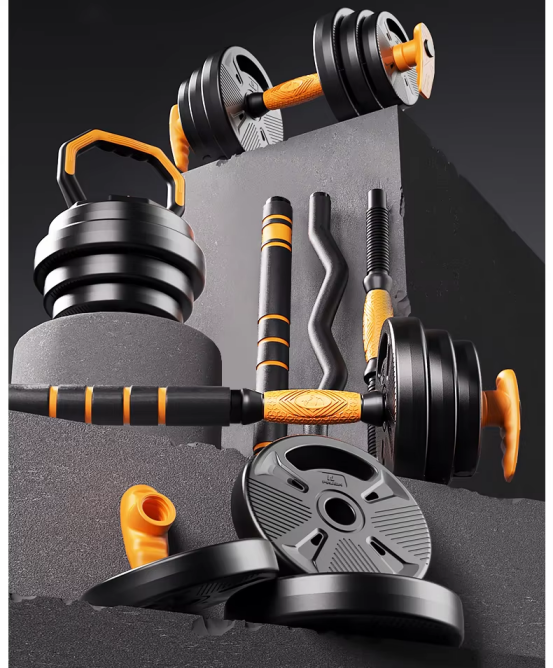
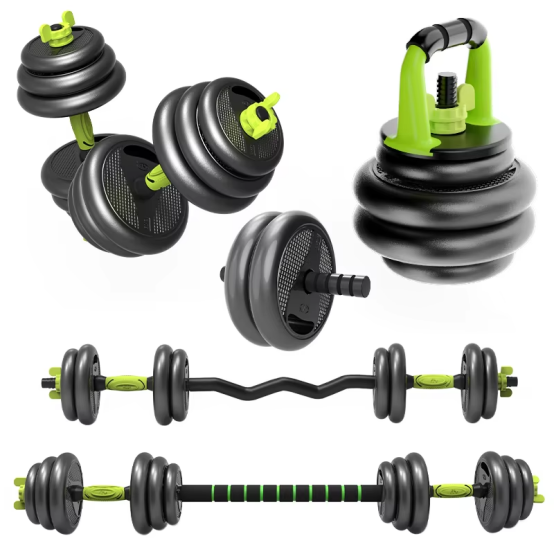
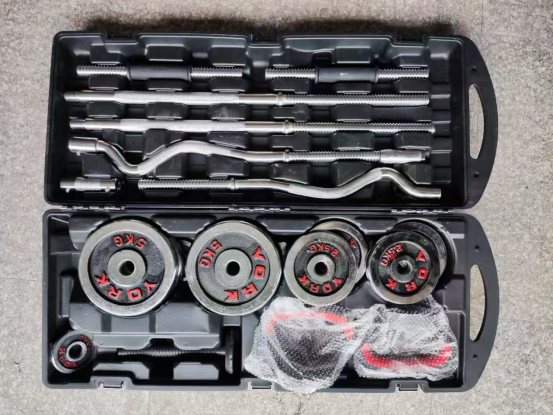
Adjustable Dumbbells: These are space-saving wonders. They consist of a handle and a set of weight plates that you can add or remove to change the total weight.
Pros: Highly cost-effective and space-efficient. One pair can replace an entire rack of fixed dumbbells. Ideal for home gyms with limited space.
Cons: It takes a minute or two to change the weight, which can interrupt your workout flow. Some older models with collar clips can be less secure, but modern designs are very reliable.
Selectorized Dumbbells (All-in-One): These are the premium adjustable option. They feature a dial or lever that automatically selects and locks the desired weight.
Pros: The fastest way to change weights—just turn a dial. Incredibly compact and user-friendly.
Cons: The highest initial investment. They can also be bulky as a single unit, even though they save space overall.
Beginner Recommendation: For a true beginner, a small set of fixed-weight dumbbells (e.g., 2kg, 4kg, 6kg, 8kg) is often the best starting point. They are simple, eliminate any friction to starting your workout, and help you build the habit. If space and budget are primary concerns, a good-quality adjustable dumbbell set is a fantastic and scalable alternative.
2. Choosing the Right Material
Dumbbells are made from different materials, affecting their look, feel, and price.
Vinyl/Urethane: Common in home sets. These are cast iron weights coated in colorful vinyl or urethane. They are comfortable to hold, resistant to chipping, and quiet if dropped.
Rubber Hex Dumbbells: The professional standard. The rubber coating protects floors and the weights themselves. The hexagonal (hex) shape prevents them from rolling away. They are durable and have a great grip.
Chrome/Steel: Often seen in commercial gyms. They have a sleek look but can be slippery if your hands sweat and are prone to chipping if mishandled.
Beginner Recommendation: Rubber Hex Dumbbells are an excellent investment for their durability and safety features. However, a vinyl-coated set is a perfectly good and more affordable option for a beginner starting at lighter weights.
3. The Million-Dollar Question: What Weight Should I Start With?
This is the most common question, and the answer is not a specific number, but a feeling.
The "Test" Method:
Pick a dumbbell and try this simple test:
Select an exercise you plan to do, like a bicep curl or a shoulder press.
Perform 12-15 repetitions with perfect form.
Ask yourself: Were the last 2-3 reps challenging but still doable with good control? Or were they impossibly easy?
Too Easy: If you could have done 5-10 more reps without much effort, the weight is too light.
Too Heavy: If you couldn't maintain proper form or complete 10 reps, the weight is too heavy.
Just Right: The last few reps should feel difficult, signaling that your muscles are being challenged enough to grow stronger.
A general starting point for absolute beginners (for exercises like biceps curls) might be 2-5kg (4-11 lbs) for women and 5-10kg (11-22 lbs) for men. However, this varies drastically. For lower-body exercises like goblet squats, you will likely be able to handle significantly more weight.
The key is to start lighter than you think. It’s far better to master your form with a light weight than to risk injury with a weight that's too heavy.
Part 2: How to Use Dumbbells: Your First Workout and Essential Techniques
Now for the fun part! Let's learn how to use your new dumbbells effectively and safely.
1. The Non-Negotiables: Proper Form and Technique
Form is everything. Good form prevents injury and ensures you are working the right muscles.
Posture is Key: Stand with your feet shoulder-width apart, knees slightly bent, and core braved (imagine someone is about to poke you in the stomach). Keep your chest up and shoulders back and down.
Control the Movement: Avoid using momentum. Lift and lower the weight with control. A good rule of thumb is a 2-second lifting phase and a 3-4 second lowering phase. This maximizes muscle engagement.
Breathe: Never hold your breath! Exhale during the hardest part of the movement (the exertion, e.g., as you curl the weight up) and inhale on the easier part (as you lower it).
Full Range of Motion: Move through the complete joint range for each exercise. For example, in a bicep curl, lower the weight until your arm is fully extended, and curl it up to your shoulder.
2. Your Beginner-Friendly Full-Body Dumbbell Workout
Perform this workout 2-3 times per week on non-consecutive days (e.g., Monday, Wednesday, Friday). Rest for 60-90 seconds between sets.
Exercise 1: Goblet Squat (Works: Legs & Glutes)
Hold one dumbbell vertically against your chest with both hands, as if cradling a goblet.
Keep your elbows pointed down.
Squat down as if sitting in a chair, keeping your back straight and chest up. Go as low as you comfortably can.
Push through your heels to return to the start.
Sets & Reps: 3 sets of 10-12 repetitions.
Exercise 2: Dumbbell Bench Press (Works: Chest, Shoulders, Triceps)
Lie on a flat bench, a sturdy coffee table, or even the floor.
Hold a dumbbell in each hand at your chest, palms facing forward.
Press the dumbbells straight up until your arms are fully extended but not locked.
Lower them back down with control.
Sets & Reps: 3 sets of 10-12 repetitions.
Exercise 3: Bent-Over Row (Works: Back & Biceps)
Stand with feet shoulder-width apart, holding a dumbbell in each hand.
Hinge at your hips, keeping your back straight, until your torso is nearly parallel to the floor. Let the dumbbells hang down.
Squeeze your shoulder blades together and pull the dumbbells up towards your lower chest.
Lower them back down with control.
Sets & Reps: 3 sets of 10-12 repetitions.
Exercise 4: Overhead Press (Works: Shoulders & Triceps)
Sit or stand with your core tight.
Hold the dumbbells at shoulder height, palms facing forward.
Press the weights directly overhead until your arms are straight.
Lower them back to your shoulders with control.
Sets & Reps: 3 sets of 10-12 repetitions.
Exercise 5: Dumbbell Lunges (Works: Legs & Glutes)
Stand holding a dumbbell in each hand.
Take a large step forward with one leg and lower your hips until both knees are bent at a 90-degree angle.
Your front knee should be above your ankle, and your back knee should hover just above the ground.
Push off your front foot to return to the start. Alternate legs.
Sets & Reps: 3 sets of 8-10 repetitions per leg.
3. Safety First: Protecting Yourself
Warm-Up: Always spend 5-10 minutes warming up with light cardio (jogging in place, jumping jacks) and dynamic stretches (arm circles, leg swings).
Cool-Down: After your workout, do some static stretches (holding a stretch for 20-30 seconds) for the muscles you worked.
Check Your Ego at the Door: Progress is a marathon, not a sprint. Increase the weight gradually—only when you can comfortably complete all your reps and sets with perfect form.
Listen to Your Body: Distinguish between good muscle fatigue and sharp, joint-related pain. If you feel pain, stop immediately.
Conclusion: Your Journey Starts Now
Embarking on your fitness journey with dumbbells is one of the most rewarding decisions you can make. They are your gateway to building strength, boosting metabolism, improving posture, and gaining immense confidence.
Start simple, focus on consistency over intensity, and celebrate every small victory. Whether you choose a basic pair of fixed weights or an adjustable set, the most important step is to begin. Your future, stronger self will thank you for it.
Happy Lifting!
— Yiwu City Lehe Sport Team | Your Partner in Fitness

 EN
EN
